Protecting Your Fertilizer Investment
CHANDLER GRUENER
BIRMINGHAM, ALABAMA
As planting season has started with a long dry spell, followed by heavy rain, I find myself thinking about fertilizer as an investment and the loss mechanisms of these nutrients. Specifically, focusing on nitrogen management, the loss mechanisms include volatilization, denitrification, and leaching.
Volatilization can occur under high residue, warm temperatures, and no rain when urea or UAN is surface applied. Volatilization in the conversion of urea to ammonia gas that floats away. Using urease inhibitors such as NBPT (N-(n-butyl)thiophosphoric triamide) and Duromide, or a combination, can slow the conversion of gas until nitrogen enters the soil. These products can last about 3 to 14 days, depending on the weather. This is an important tool for nutrient management during dry periods, such as April this year.
Leaching is another loss pathway in which nitrogen simply moves below the rooting zone. This can occur when water moves through the soil, especially during heavy rainfall. Denitrification is another pathway of loss, with nitrate converting to gas. This often occurs when there is ponding or saturated soils. When big spring rain comes 5 inches at a time, they can cause leaching, and ponded soils can also have denitrification occurring. There are products (dicyandiamide, DCD) that slow the conversion of ammonium nitrogen in the soil to nitrate, thereby slowing the rate of a process called nitrification. This is key, as nitrate is a form of nitrogen in the soil that is susceptible to loss through denitrification and leaching. Slowing the nitrification process allows smaller amounts to be available for plant uptake at a time, reducing the amount remaining in a highly soluble form that can be lost as gas or leached. Altering this process can improve nitrogen uptake efficiency at stations where losses are more likely.
As fertilizer prices are high, making sure you get the most out of your fertilizer and don’t lose it is important. For these products and any additives, overall effectiveness and duration depend on weather conditions and soil type. ∆
CHANDLER GRUENER
ALABAMA A&M UNIVERSITY
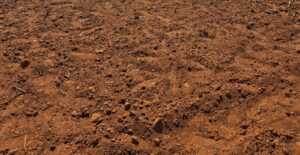
Image 1. Surface-applied urea that was not treated with a urease inhibitor is susceptible to loss without a timely and moderate rainfall event to incorporate into the soil.
Link to Original Article: https://mailchi.mp/4b5615d2326d/october-4-2019-alabama-cotton-shorts-5758771?e=fed2a809ad