

Whitney Crow, Extension Entomologist
Tyler Towles, Research Entomologist
Don Cook, Entomologist
Latest Tweets
Update (July 30, 2026 – Afternoon): Since this article was published earlier today, Twospotted Cotton Leafhopper/ Cotton Jassid have been confirmed in a cotton field near Lucedale, Mississippi. Both adults and nymphs were detected at low populations along the field edge. At this time, the infestation appears to be localized, and there is no indication of widespread infestations. We will continue to monitor this field and surrounding areas closely. Populations were not detected in adjacent fields. Growers and consultants are encouraged to continue scouting field borders and report any suspected infestations for confirmation. Keep this in mind as you read the rest of the article.
As we move through the 2026 growing season, conditions across the Southeast appear to be shaping up much like last year with regard to the Twospotted Cotton Leafhopper/Cotton Jassid. While this invasive pest has been confirmed in cotton in Central Louisiana this season, it has not been confirmed in Mississippi cotton fields to date.
We are aware of this pest occurring in ornamental crops in south Mississippi; however, there have been no confirmed infestations in cotton. We have been conducting weekly surveys of cotton fields across the state, and thus far, there have been no detections.
Last year, the first confirmed occurrence in Mississippi cotton was not until mid-September. We are hopeful that this year’s situation will follow a similar pattern, but continued vigilance remains important.
Now is a good time to familiarize yourself with the identification and injury symptoms associated with this pest. Early detection is critical for documenting its distribution and ensuring timely management recommendations if populations become established.
Identification

-
Adults: Approximately 2 mm long; pale green with yellowish-green wings.
-
Key identifying features: Usually have a prominent black spot near the tip of each forewing and often two dark spots on the head. These markings may be faint or absent.
-
Nymphs: Wingless, pale green, and less than 1.3 mm long. They are highly active and can be difficult to distinguish from other leafhopper nymphs.
-
Behavior: Nymphs characteristically move sideways or quickly hop when disturbed.
Injury Symptoms

This pest feeds by piercing leaf tissue and extracting plant sap. As feeding progresses, plants may exhibit:
-
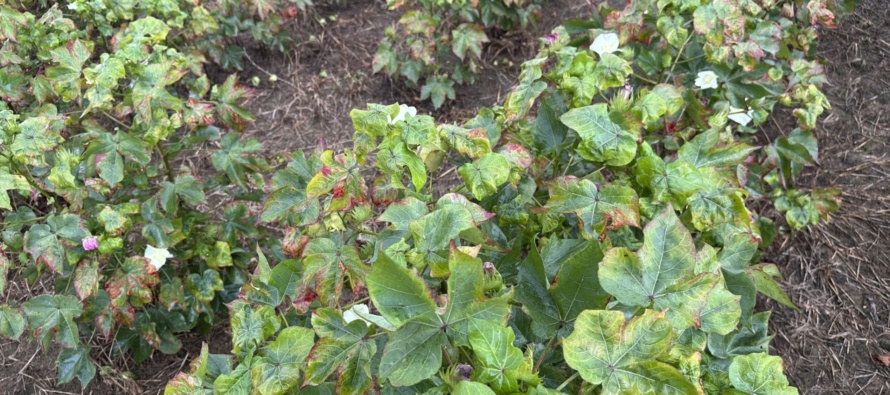
Upward curling or cupping of leaf margins.
-
Yellowing followed by reddening or browning of leaf edges (“hopperburn”).
-
Stunted plants with shortened internodes under heavy infestations.
-
Reduced plant vigor and potential yield loss if infestations are severe and prolonged.
Scouting Recommendations
Routine scouting is the best way to detect this pest before populations become established.
-
Count nymphs on the underside of the mainstem leaf located four nodes below the terminal.
-
Examine at least 25 leaves per field to obtain a representative estimate of the population.
-
Focus on field borders, where infestations typically begin before spreading farther into the field.
-
Inspect isolated plants along field edges, as these often serve as “indicator plants” and are the first to become infested and develop symptoms.
Report Suspected Infestations
If you suspect you have found the pest, please contact me (901-592-8787) before making management decisions. This insect can easily be confused with other leafhopper species, and confirmation is important to ensure accurate identification. Reporting suspected infestations also helps us document its distribution in Mississippi and provide timely, science-based recommendations to producers.
We appreciate the assistance as we work together to monitor this emerging pest in Mississippi cotton.
Whitney Crow, Extension Entomologist
Tyler Towles, Research Entomologist
Don Cook, Entomologist
Link to Original Article: https://www.mississippi-crops.com/2026/07/30/2026-twospotted-cotton-leafhopper-cotton-jassid-status/