Specialists Speaking- Ken Legé
Ken Legé
TEXAS
West Texas entered the 2026 growing season with timely rainfall that supported planting operations across much of the region. However, inadequate subsoil moisture reserves left many fields vulnerable to later-season stress. Frequent rainfall events continued in many areas through the second week of July, but beneficial precipitation has since been absent. As of Aug. 11, prolonged drought conditions combined with excessive heat have begun to take a significant toll on both dryland and irrigated cotton.
Without meaningful rainfall by mid-August, abandonment across West Texas could exceed 40%, creating additional economic challenges for the region’s cotton gins. Another year of substantial acreage loss would further pressure facilities that depend on sufficient volume to maintain profitable operations.
In the Texas Panhandle, irrigated cotton remains in good to very good condition. Dryland production, however, is nearly nonexistent. Limited rainfall during the late April to early May planting window led many producers to shift acreage to alternative crops, resulting in reduced dryland cotton acres across the region.
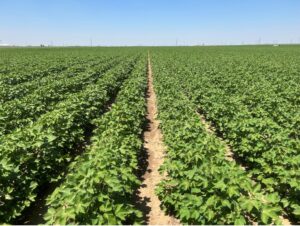
Across the Northern High Plains, from Lubbock north to Tulia, irrigated fields continue to show good yield potential. The outlook for dryland cotton is considerably less favorable. While stand establishment was generally good, persistent drought and extreme temperatures have severely restricted plant growth. Many fields are only 7 to 8 inches tall and have prematurely cut out shortly after first bloom due to moisture stress (Fig. 1). Much of this dryland acreage is expected to be abandoned.
Even dryland cotton planted following wheat fallow, which typically benefits from additional stored soil moisture accumulated during the fallow period, is under increasing stress and remains at risk if rainfall does not arrive soon (Fig. 2).
The Southern High Plains, extending south from Lubbock, traditionally contains the largest concentration of cotton acreage in West Texas. Most of this crop was planted in early June, and timely rainfall allowed producers to establish excellent stands. Irrigated cotton in this region is generally rated good to very good and continues to develop favorably (Fig. 3).
The next two weeks will be critical for the area’s dryland cotton. Much of the crop has recently entered bloom or will do so shortly. Effective rainfall by approximately Aug. 15 could allow plants to continue blooming and set a harvestable crop. However, isolated or insufficient rainfall is unlikely to sustain production through the remainder of the season. Under that scenario, abandonment of additional dryland acreage would be likely.
For many West Texas producers, the outlook for the 2026 cotton crop now hinges on whether meaningful rainfall arrives during this narrow but critical window. The coming days will largely determine the productivity of remaining dryland acres and, ultimately, the size of the region’s harvest.
Figure 1. Typical dryland cotton in the northern High Plains in 2026. Picture taken July 31, 2026.
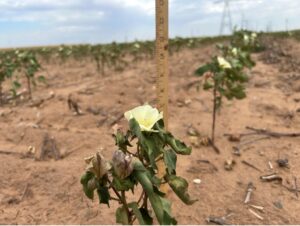
Figure 2. Dryland cotton in Swisher County, Texas, planted behind wheat fallow. Picture taken July 29, 2026.
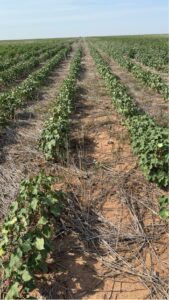
Figure 3. Drip-irrigated (drip lines 80” apart; this field has four gallons/minute/acre capacity) cotton in Lubbock County, Texas, on Aug. 3, 2026.