According to the Texas Drought Monitor map, 93% of the state has fallen into at least early drought stages, with more than 35% experiencing severe drought or worse. This is an increase of 8% from last week and 25% more than this time last year.
Increased stress due to drought leads to many other concerns: less water for irrigation, reduced yields, greater insect infestation and crop disease, a need for increased irrigation amid dropping water tables, reduced pasture and forage, early supplemental feeding of livestock, decreased stock weights, and less water in ponds, creeks and playa lakes.
One of the bright spots
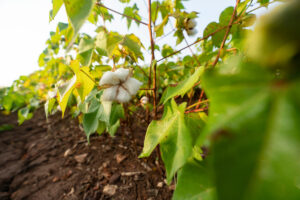
The Coastal Bend is wrapping up cotton harvest with few problems. Good spring rains provided enough subsoil moisture to last row crops like corn, sorghum and cotton through most of July without significant moisture stress, said Josh McGinty, Ph.D., AgriLife Extension agronomist and assistant professor, Texas A&M AgriLife Research and Extension Center at Corpus Christi.
However, extreme heat and dry conditions are causing concerns about soil moisture profiles for future plantings.
“Hot, dry weather in August is generally a good thing for us while getting cotton out of the field,” McGinty said. “We need some good rains soon, though, to start replenishing the profile for next spring.”
High Plains and Rolling Plains crops suffer
The High Plains has remained locked in severe drought conditions over the past several weeks, said Kevin Heflin, Ph.D., AgriLife Extension agronomist and assistant professor, Texas A&M AgriLife High Plains Research and Extension Center in Canyon.
Conditions declined due to minimal rainfall and continued extreme heat and high winds throughout August and September, Heflin said.
“For sorghum and other summer crops, this has meant sharply reduced yields on irrigated fields and outright crop failure on dryland acres,” he said. “Daily water demand has been as high as half an inch per day during 100-plus degree stretches, leaving little hope that any rain can save drought-stressed summer forage crops for many producers.”
When moisture stress occurs late in the season, there can be incomplete pollination and reduced grain or biomass yield, Heflin said. This makes irrigation timing, or rain, particularly important for limited-water systems in the Panhandle.
Another concern for producers growing forage sorghums is prussic acid or cyanide accumulation, which spikes in young, stressed or frost-damaged sorghum tissue. Grazing or greenchop of drought-stressed forage sorghum should be delayed or tested before feeding to livestock.
Heflin said incidences of lodging, blasted heads, wind damage, delayed maturity and reduced yields are unfortunately typical for 2026 summer crops.
Emi Kimura, Ph.D., AgriLife Extension agronomist and professor, Texas A&M AgriLife Research and Extension Center at Vernon, echoed Heflin, saying high daytime temperatures combined with a lack of precipitation increased stress on cotton and peanuts in the Texas Rolling Plains.
Evapotranspiration reached 2.5 inches per week in July and August before slowing to 2 inches per week in September; however, soil moisture losses continue without significant rainfall.
According to the U.S. Department of AgricultureFarm Service Agency acreage report, as of Sept. 11, approximately 10% of the 3.7 million total reported dryland crop acres in Texas were declared failed.
Rice-growing regions affected by too much rain
Texas typically grows two rice crops per growing season. The main crop harvest is complete, with reports of yields and milling slightly below average due to increased rainfall and cloudy weather during pollination, said Sam Rustom, Ph.D., AgriLife Extension agronomist and assistant professor at Eagle Lake and the Texas A&M AgriLife Research and Extension Center at Beaumont.
While the second crop, called the ratoon crop, is progressing, some parts of the Texas rice belt are having trouble with regrowth due to rains and cloudy weather. Wet, cloudy conditions during the main crop’s reproductive stages most likely cause apical dominance, Rustom said.
Apical dominance is the biological process where ratoon tillers grow from the upper and/or middle nodes of rice plants rather than the basal nodes, he said. Regrowth from middle and upper nodes is usually weaker, with smaller panicles resulting in lower yield and grain quality.
“Additionally, rice delphacid remains the No. 1 pest management concern for Texas rice producers, especially during this time of year,” Rustom said. “While 2026 has been relatively mild, we have observed the insect in most, if not all the rice-growing counties across the Texas rice belt this year.”
There have been slight increases in rice delphacid activity in recent weeks, but a stronger beneficial/predatory insect complex this year is helping mitigate impact.
“Keep in mind that we are still learning about this pest, and populations can explode at any time, especially as the ratoon rice gets deeper into the reproductive stages like heading and grain fill,” Rustom said.
Tough wheat planting conditions
Going into wheat planting season, Brandon Gerrish, Ph.D., AgriLife Extension statewide small grains specialist and assistant professor, Department of Soil and Crop Sciences, Bryan-College Station, said seed dealers are reporting only 60-70% of normal supplies this year.
He said the seed shortage was due to poor growing conditions in the 2026 crop. And now wheat planting conditions are still not good across the state. There have been isolated rains, but moisture dries up quickly with the high temperatures.
“Growers who are wanting to graze are the most eager to get seed into the ground right now,” Gerrish said. “Those planting for grain still have a few weeks before they will get going; hopefully temperatures will cool, and we’ll have some more rainfall between now and then.” ∆
KAY LEDBETTER
TEXAS AGRILIFE
Much of the cotton crop across Texas was struggling under drought conditions. (Laura McKenzie/Texas A&M AgriLife)