Resistance Testing Helps Mid-South Cotton Growers Stay Ahead

By Grant Saum, Mid-South Regional Communications Manager, The Cotton Board
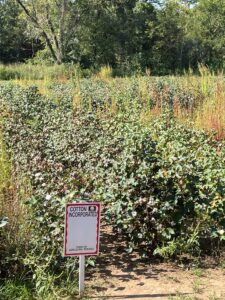
As cotton harvest begins across the Mid-South, researchers are making their way into fields across the region to collect seed heads from weeds that survived herbicide applications.
Herbicide resistance is nothing new to Mid-South cotton producers; however, the growing number of weed species and herbicide groups presenting challenges continues to make weed management more complicated and expensive. Palmer amaranth remains one of the biggest concerns, while grasses including Italian ryegrass, Johnsongrass, goosegrass and barnyard grass are becoming increasingly difficult to control.
The Cotton Research and Promotion Program helps fund critical research projects that focus on weed management, among other areas. Through its Core Research Program and State Support Program funding, Cotton Incorporated continues to invest in research aimed at identifying herbicide resistance and helping growers determine the most cost-effective weed management practices, while preserving these herbicide tools into the future. Resistance testing is supported in multiple states, with efforts underway to better coordinate testing across the Cotton Belt.
“Herbicide resistance does not stop at state lines, so coordinating this work across the Cotton Belt gives us a clearer understanding of where resistance is developing, how quickly it is spreading, and how we should be modifying our management practices” said Gaylon Morgan, Ph.D., Director of Agricultural & Environmental Research at Cotton Incorporate. “That information helps researchers develop practical recommendations allowing producers to make more informed and economical weed management decisions.”
When researchers and Extension personnel hear from farmers or consultants about suspected herbicide resistant weeds, they travel to fields and collect mature seed heads in the fall. Those seeds are brought back to the greenhouse and screened during the winter to determine whether herbicide resistance is present, the level of resistance, and to what modes-of-action.
 While it may sound like a relatively simple process, confirming resistance takes time. Traditional greenhouse screening can take several months from collection to a confirmed result. For some soil-applied herbicides, researchers can use agar-based assays to speed up the screening process. Those methods may only shorten the timeline by a few weeks. Cotton Incorporated and other commodities are supporting research to identify quicker herbicide resistance testing, with the goal of having near real-time results. Quicker testing methods would be a huge advancement in identifying and managing herbicide resistant weeds.
Testing is important because a weed surviving an herbicide application does not necessarily mean it is resistant. Reduced control in the field can be caused by several factors, including inadequate spray coverage and tank-mix antagonism, in addition to true herbicide resistance.
Jason Norsworthy, Ph.D., Distinguished Professor and Elms Farming Chair of Weed Science with the University of Arkansas System Division of Agriculture, said the value of resistance screening ultimately comes back to helping growers avoid ineffective and costly applications.
“The herbicide resistance screening program enables growers to make informed decisions about which herbicides will or will not work in their fields,” Norsworthy said. “When an applied herbicide fails, that grower will spend exponentially more money to control the weed, and in many cases, they will be unsuccessful with chemical options. Furthermore, knowing you have resistance in a weed like Palmer amaranth early helps encourage changes in management strategies before the problem becomes widespread.”
Current resistance concerns across the region demonstrate why determining the difference matters. Cotton Incorporated’s Agricultural Research Update identifies Palmer amaranth resistance to glufosinate, dicamba and 2,4-D among the most pressing issues. Other concerns include glyphosate-resistant Johnsongrass, widespread glyphosate resistance in goosegrass and Italian ryegrass resistance to multiple herbicides.
Resistance screening is also becoming increasingly important as researchers and the industry evaluate herbicide technologies that could provide additional options for cotton producers. Knowing how weeds currently respond to these herbicides can help growers determine where the technologies may fit into future weed management programs.
Norsworthy said screening across the Mid-South is already providing important information about HPPD herbicides.
“With the anticipated registration of the HPPD herbicides topramezone and isoxaflutole in Axant Flex™ cotton, it is imperative that growers understand the likelihood of success with these herbicides,” Norsworthy said. “Screening surveys on Palmer amaranth across the Mid-South cotton production region are revealing that postemergence resistance to topramezone and isoxaflutole is widespread; however, isoxaflutole remains an effective residual option on most Palmer amaranth populations.”
For growers, those findings could directly influence how technology is incorporated into a weed management program.
“Knowing this, growers will need to apply isoxaflutole at planting or place it with an effective postemergence herbicide, relying on the isoxaflutole for residual control,” Norsworthy said.
Identifying resistance is only one part of the equation. The Cotton Research and Promotion Program is also supporting research into management strategies for resistant weeds. Years of research have evaluated the use of cover crops alongside herbicide programs, with results showing that cover crops can reduce weed density at planting and later in the growing season. Generally, greater cover crop biomass, particularly with cereal rye, provides greater and longer-lasting weed suppression.
Cover crops also give growers another tool beyond herbicides. By adding a different selection pressure, they can help manage existing herbicide-resistant weeds, slow the development of additional resistance and preserve the effectiveness of available herbicides.
Producers who suspect herbicide resistance in their fields can work with their local Extension weed specialists to determine whether samples should be collected and submitted for screening.
As researchers collect samples this fall and screen them throughout the winter, the goal is not simply to document resistance. It is to better understand what is happening in Mid-South cotton fields and turn that information into practical recommendations for growers for the short-term and long-term management of problematic weeds.
Knowing what will not work can be just as valuable as knowing what will. As new technologies become available and resistance continues to evolve, Cotton Incorporated’s investment in resistance screening and alternative management strategies are giving Mid-South growers information they can use before an herbicide failure becomes a much more expensive problem.